
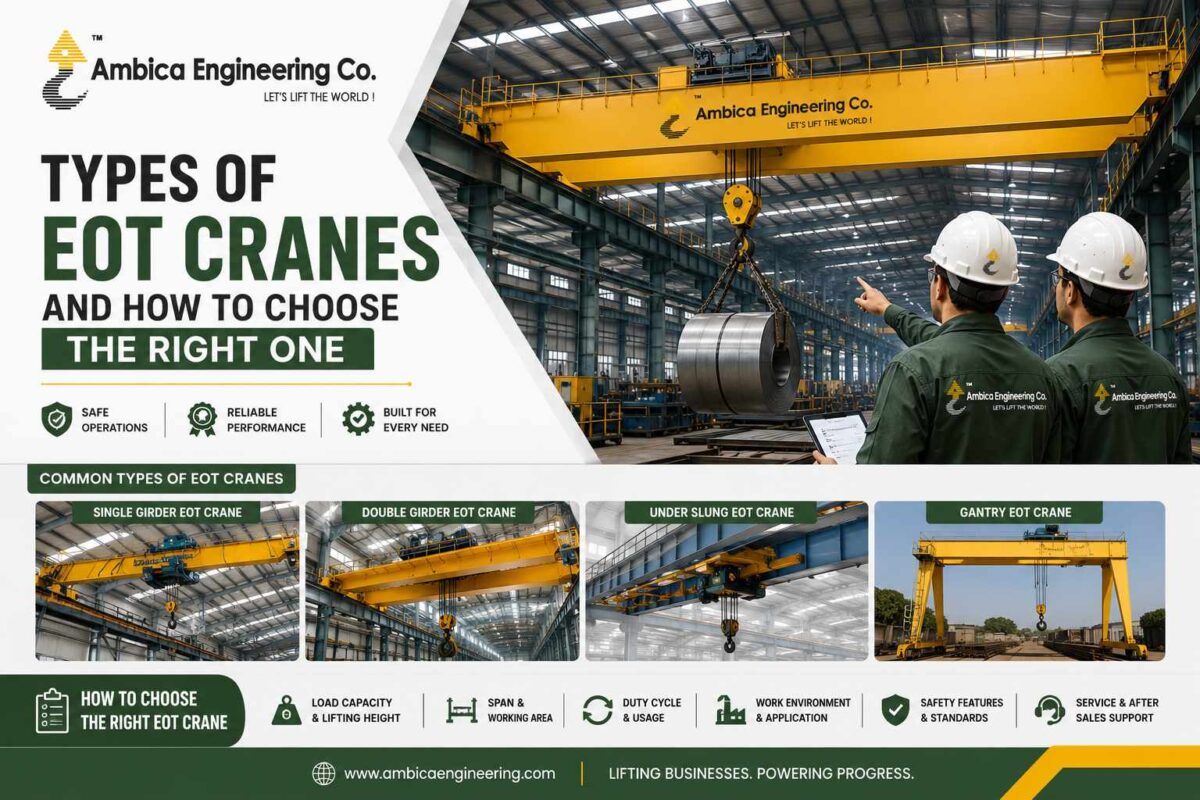
Material handling plays a crucial role in modern industries, and EOT cranes have become an essential part of manufacturing plants, warehouses, steel industries, and heavy engineering facilities. Selecting the right crane not only improves productivity but also enhances workplace safety and operational efficiency.
Understanding the different types of EOT cranes and their applications can help businesses make better investment decisions and ensure smooth material handling operations.
What is an EOT Crane?
EOT stands for Electric Overhead Traveling crane. These cranes operate on overhead runways and are widely used for lifting and transporting heavy loads within industrial facilities. Their ability to move materials efficiently makes them an important asset in various industries.
Businesses often consult an experienced eot crane manufacturer to identify the most suitable crane based on their operational requirements, load capacity, and workspace conditions.
Types of EOT Cranes
Single Girder EOT Crane
Single girder EOT cranes consist of one bridge girder supported by end trucks. The hoist usually runs on the bottom flange of the girder.
Best for:
- Small and medium industries
- Warehouses
- Assembly units
- Maintenance workshops
Advantages:
- Cost-effective solution
- Lightweight design
- Lower installation cost
- Requires less headroom
Single girder cranes are ideal for moderate lifting capacities and shorter spans.
Double Girder EOT Crane
Double girder cranes feature two bridge girders that support the trolley and hoist system. These cranes are designed for heavy-duty industrial applications.
Best for:
- Steel plants
- Heavy engineering industries
- Manufacturing facilities
- Power plants
Advantages:
- Higher load capacity
- Greater lifting height
- Better stability
- Suitable for continuous operations
Many businesses prefer consulting an experienced eot crane manufacturer when selecting heavy-duty double girder solutions for demanding industrial environments.
Top Running EOT Crane
Top running cranes operate on rails mounted on top of runway beams. These cranes maximize lifting height and provide excellent performance.
Suitable for:
- Large industrial facilities
- Heavy load applications
- Long-span operations
Their design allows greater hook height and increased lifting capacity.
Under Running EOT Crane
Under running cranes are suspended from the roof structure or ceiling and move along tracks attached underneath the runway beams.
Benefits include:
- Efficient use of floor space
- Ideal for limited headroom
- Suitable for lighter loads
These cranes are commonly used in smaller production facilities and workshops.
Process Cranes
Process cranes are specially designed for industries that require continuous material handling operations, such as steel manufacturing, paper mills, and foundries.
They offer:
- High operational reliability
- Advanced control systems
- Heavy-duty performance
- Long service life
Factors to Consider When Choosing an EOT Crane
Load Capacity
The first step is determining the maximum load the crane will handle. Choosing a crane with the appropriate lifting capacity ensures safety and operational efficiency.
Span Length
The distance between the runway rails determines the required crane span. Accurate measurements are essential for proper installation.
Lifting Height
The required hook height and available headroom influence the crane design and configuration.
Duty Cycle
Industries with continuous operations require cranes designed for higher duty cycles. Selecting the correct classification improves reliability and reduces maintenance costs.
Workspace Conditions
Temperature, dust, humidity, and environmental conditions can impact crane performance. The right crane should be designed to withstand the specific operating environment.
Future Expansion
Businesses expecting future growth should consider cranes that can accommodate increased production demands and higher lifting requirements.
Why Quality Matters
Choosing a reliable manufacturer ensures superior design, durable components, and long-term performance. High-quality cranes reduce downtime, improve safety, and lower maintenance expenses.
Many businesses searching for an eot crane manufacturer in Ahmedabad look for companies that provide customized solutions, quality engineering, and dependable after-sales support.
Importance of After-Sales Service
Regular maintenance and technical support are essential for maintaining crane performance. A trusted eot crane supplier provides spare parts availability, service support, inspections, and maintenance assistance to ensure uninterrupted operations.
Ambica Engineering delivers industrial lifting solutions designed to meet the varying requirements of modern industries. Their focus on quality and customer satisfaction helps businesses achieve reliable and efficient material handling operations.
Conclusion
Selecting the right EOT crane depends on factors such as load capacity, application, workspace, and operational requirements. Understanding the different types of EOT cranes allows businesses to invest in equipment that improves productivity and safety.
Ambica Engineering continues to support industries with dependable crane solutions that enhance operational efficiency and long-term performance. Choosing the right crane today can significantly contribute to the success of your industrial operations tomorrow.