
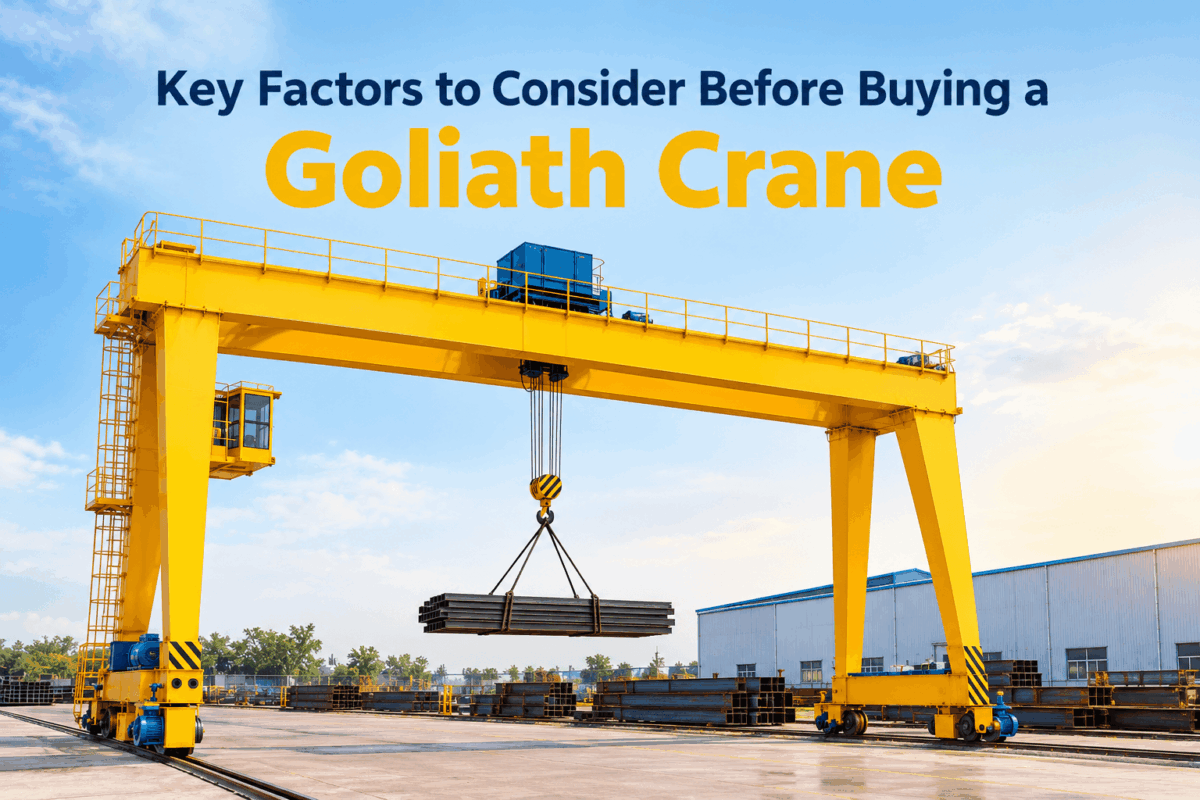
When handling heavy materials in large industrial areas, choosing the right lifting equipment can make a major difference in productivity, safety, and operating costs. A Goliath Crane, also known as a gantry crane, is commonly used in applications where materials need to be lifted and moved across an open working area.
However, buying a crane is a long-term investment. The right choice depends on several factors, including lifting capacity, working environment, crane dimensions, safety requirements, and maintenance needs. Before making a decision, it is important to understand what your facility actually requires.
Key Factors for Buying a Goliath Crane
Determine the Required Lifting Capacity
The first thing to consider is the maximum weight the crane will need to lift. Goliath cranes are available in different capacities, so selecting one based on your regular and maximum load requirements is essential.
Consider:
- Average load weight
- Maximum load weight
- Frequency of lifting
- Type and shape of materials
- Future changes in production requirements
Choosing a crane with insufficient capacity can create safety and operational problems, while selecting one far beyond your requirements may increase the initial investment unnecessarily.
Consider the Crane Span and Working Area
The span refers to the distance between the crane’s supporting legs. It should match the area where materials need to be lifted and transported.
Before finalizing the design, measure the available workspace and consider:
- Required coverage area
- Distance between storage and production zones
- Available floor space
- Existing structures and equipment
- Required hook movement
A properly designed span allows the crane to cover the required area without creating unnecessary movement or limiting other operations.
Check the Required Lifting Height
Lifting height is another important consideration. The crane should provide enough clearance to safely lift and position loads without interfering with buildings, machinery, pipelines, or other structures.
Think about both the height of the materials being handled and the clearance required above them. Discussing these measurements with an experienced Goliath Crane manufacturer can help you determine a suitable configuration for your facility.
Understand the Working Environment
Where the crane will operate can significantly influence its design.
For outdoor applications, the equipment may be exposed to:
- Rain and moisture
- Dust
- Strong winds
- Temperature variations
- Corrosive conditions
Indoor applications may have different requirements depending on the production environment. For example, a manufacturing plant, steel facility, warehouse, or construction yard may require different crane specifications.
The crane should be designed according to the actual operating conditions rather than using a standard configuration without considering the environment.
Select the Right Hoist and Lifting Mechanism
The hoist is responsible for lifting and lowering the load, making it a critical part of the crane system.
When selecting the hoist, consider the required:
- Lifting capacity
- Lifting speed
- Lifting height
- Duty cycle
- Load-handling frequency
For operations involving frequent lifting, a suitable duty classification and reliable lifting mechanism can contribute to smoother and more consistent performance.
Evaluate Travel Speed and Movement Requirements
A Goliath crane generally moves along rails or a prepared travel path. The required travel speed depends on how frequently and how far loads need to be moved.
If materials are transported over a large area, suitable travel speeds can help reduce handling time. However, speed should always be balanced with load stability, operating conditions, and safety.
You should also consider whether the crane requires:
- Long-distance travel
- Cross travel
- Variable-speed operation
- Remote operation
- Precise positioning
Consider Safety Features
Safety should be one of the main priorities when investing in lifting equipment. A crane should incorporate suitable safety features based on its application and operating environment.
Depending on the design, these may include overload protection, emergency stop systems, limit switches, brakes, anti-collision arrangements, warning systems, and appropriate controls.
Operators should also receive proper training, and regular inspections and maintenance should be included in the operating plan.
Look at Structural Design and Material Quality
The structural components of a Goliath crane need to withstand repeated loading and movement over its service life. The quality of materials, fabrication, welding, and overall engineering can influence reliability and durability.
When comparing options, ask the manufacturer about:
- Structural design
- Material specifications
- Welding and fabrication standards
- Load testing
- Quality-control procedures
- Inspection and documentation
For industrial buyers, working with an established company such as Ambica Engineering can help in discussing crane configurations based on the specific application.
Think About Installation Requirements
A crane’s installation requirements should be considered before purchasing. The site may need suitable foundations, rails, power connections, access space, and other supporting arrangements.
For an outdoor crane, ground conditions and rail alignment are particularly important. Installation planning should also account for transportation of crane components and the equipment needed for assembly.
Discussing installation requirements early can help avoid unexpected delays and additional costs.
Compare Maintenance and After-Sales Support
A crane is not simply a one-time purchase. Regular maintenance is necessary to keep the equipment operating safely and efficiently.
Before buying, ask about:
- Availability of spare parts
- Preventive maintenance requirements
- Service support
- Inspection schedules
- Warranty coverage
- Technical assistance
Reliable after-sales support can be especially valuable when the crane is used frequently or forms an important part of the production process.
Choose an Experienced Supplier
The supplier you choose can have a major impact on the overall buying experience. Instead of comparing products only by price, look at the supplier’s experience, engineering capabilities, manufacturing quality, installation support, and service network.
When evaluating gantry crane suppliers, ask whether they can understand your application and provide a crane designed around your actual requirements.
An experienced Gantry crane manufacturer in India should be able to discuss factors such as capacity, span, lifting height, duty cycle, operating environment, controls, and safety requirements before recommending a suitable solution.
Consider Your Future Requirements
Your current requirements may not remain the same for the entire life of the crane. Production capacity may increase, heavier materials may need to be handled, or the layout of your facility may change.
Therefore, consider future requirements before finalizing the crane specification. A little planning at the purchasing stage can prevent the need for major modifications later.
Making the Right Goliath Crane Investment
Buying a Goliath crane requires more than simply selecting a lifting capacity. The crane’s span, lifting height, working environment, hoist, travel requirements, safety systems, structural design, installation needs, and after-sales support all need to be considered.
Taking time to evaluate these factors can help you select equipment that fits your operation and provides reliable performance over the long term. Ambica Engineering can be considered when discussing industrial crane requirements and configurations based on specific material-handling applications.
Conclusion
The right Goliath crane should match your workload, workspace, operating conditions, and future requirements. Before making the final purchase, compare technical specifications, supplier experience, safety features, maintenance support, and overall operating requirements rather than focusing only on the initial cost.
A well-planned selection process can help improve material handling efficiency while supporting safe and dependable industrial operations.