
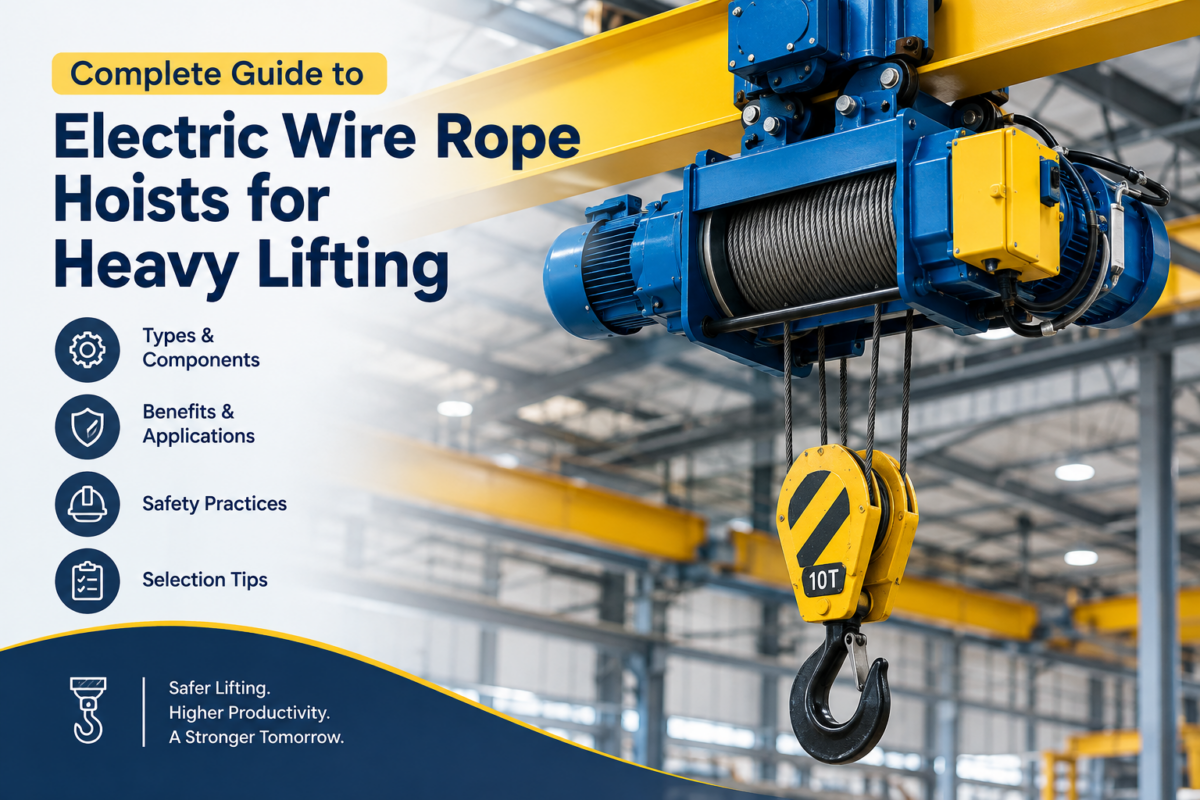
Heavy lifting is a routine requirement in manufacturing plants, warehouses, workshops, construction sites, and various industrial facilities. Moving heavy loads manually can be slow, physically demanding, and unsafe. This is where an electric wire rope hoist becomes an important material-handling solution.
Designed to lift, lower, and position heavy loads with controlled movement, these hoists combine an electric motor, wire rope, drum, gearbox, brake system, and lifting accessories into one reliable unit. Choosing the right hoist, however, requires more than simply checking its lifting capacity.
This guide explains how electric wire rope hoists work, their major components, benefits, applications, and the key factors to consider before purchasing one.
What Is an Electric Wire Rope Hoist?
An electric wire rope hoist is a powered lifting device used to raise and lower heavy materials. Instead of relying on manual effort, it uses an electric motor to drive a drum around which a steel wire rope is wound.
The wire rope is connected to a hook or other lifting attachment, allowing the hoist to handle loads in a controlled manner. Depending on the installation, the hoist can be used as a standalone lifting unit or integrated with equipment such as an EOT crane, gantry crane, or monorail system.
The right configuration depends on factors such as load weight, lifting height, operating frequency, available space, and the nature of the application.
How Does an Electric Wire Rope Hoist Work?
The working principle is relatively straightforward.
When the operator activates the lifting control, electrical power is supplied to the hoist motor. The motor transfers rotational power through a gearbox to the rope drum. As the drum rotates, the wire rope winds onto it, raising the attached load.
For lowering, the motor operates in reverse or via the appropriate control mechanism, allowing the rope to unwind in a controlled manner.
A braking system helps stop and hold the load when the lifting movement is interrupted. Depending on the design, additional safety and control components may be incorporated to improve operational reliability.
Main Components of an Electric Wire Rope Hoist
Understanding the main components makes it easier to compare different hoist configurations.
Electric Motor
The motor provides the power required for lifting and lowering operations. Its specifications influence lifting speed, performance, and suitability for the intended duty cycle.
Wire Rope
The steel wire rope carries the load and transfers lifting force between the drum and hook assembly. Rope construction and diameter should be selected according to the rated capacity and operating conditions.
Rope Drum
The drum stores the wire rope as it moves during lifting and lowering. Its dimensions and construction are important for smooth rope winding and long-term service.
Gearbox
The gearbox transfers motor power to the drum while providing the required speed and torque. A properly designed gear system helps maintain smooth lifting performance.
Brake
The braking mechanism helps stop the load and hold it securely when the lifting control is released. Reliable braking is especially important when handling heavy or valuable materials.
Hook and Hook Block
The hook connects the hoist to the load or lifting accessory. Hook blocks may include components such as pulleys and safety latches depending on the hoist configuration.
Control System
Controls allow the operator to manage lifting, lowering, and other available movements. Modern systems may use pendant controls, push-button stations, or remote controls.
Limit Switches
Limit switches help control the permissible travel of the lifting mechanism. They can prevent over-travel and contribute to safer operation.
Key Benefits of Electric Wire Rope Hoists
Electric wire rope hoists are widely used because they offer several practical advantages for demanding lifting environments.
High Lifting Capacity
They are suitable for applications where substantial loads need to be moved regularly. Different capacities and configurations are available for light, medium, and heavy-duty operations.
Controlled Load Movement
Powered lifting provides better control than manual lifting methods. Operators can raise and lower materials with greater consistency, which is useful when accurate positioning is required.
Reduced Manual Effort
An electric motor performs the primary lifting work, reducing physical effort for operators and making repetitive lifting tasks more manageable.
Suitable for Frequent Operation
When correctly selected for the required duty class, an electric hoist can support repeated lifting cycles throughout industrial operations.
Improved Workplace Productivity
Faster and more controlled material movement can reduce unnecessary handling time and help improve workflow efficiency.
Flexible Installation
Depending on the design, these hoists can be incorporated into overhead cranes, gantry systems, monorails, and other lifting arrangements.
Where Are Electric Wire Rope Hoists Used?
Their versatility makes them suitable for a wide range of industries.
Common applications include:
- Manufacturing plants
- Steel and metal industries
- Fabrication workshops
- Warehouses and logistics facilities
- Construction projects
- Automotive manufacturing
- Engineering industries
- Power plants
- Foundries
- Shipyards
- Maintenance workshops
- Heavy machinery handling
The actual hoist configuration should always be matched to the working environment and load-handling requirements.
How to Choose the Right Electric Wire Rope Hoist
Selecting a hoist based only on its maximum capacity can lead to an unsuitable installation. Consider the following factors before making a decision.
Load Capacity
Start by identifying the maximum load that the hoist will need to lift. The rated capacity should be appropriate for the heaviest intended load rather than the average load.
Avoid choosing a hoist simply because its capacity is close to the expected load. A proper engineering assessment should determine the appropriate capacity and safety requirements.
Lifting Height
Determine the maximum vertical distance through which the load needs to be lifted. The required rope length and hoist configuration depend on this measurement.
Lifting Speed
Consider how quickly materials need to be moved. High-speed lifting may be beneficial in high-throughput operations, while slower movement can provide better control for positioning-sensitive applications.
Duty Cycle
How often will the hoist operate?
A hoist used occasionally requires a different duty consideration from one operating continuously throughout multiple shifts. Discuss the expected operating cycle with the supplier or engineering team before selecting the equipment.
Operating Environment
Temperature, dust, moisture, chemicals, heat, and other environmental conditions can affect equipment performance. A hoist installed in a harsh industrial environment may require a suitable protective configuration.
Available Power Supply
Check the electrical supply available at the installation site. Voltage, phase, frequency, and motor requirements should be compatible with the facility’s electrical system.
Installation Arrangement
Determine how the hoist will be installed. It may operate with an overhead crane, gantry, monorail, or another supporting structure. The supporting structure must also be capable of safely carrying the required loads.
Safety Features
Look for appropriate braking, overload protection, limit switches, emergency controls, and other safety features relevant to the application.
Maintenance Requirements
A practical hoist should allow routine inspection, lubrication, adjustment, and component replacement without unnecessary difficulty. Easy access to serviceable components can help reduce downtime.
Why Choosing the Right Manufacturer Matters
The quality of the hoist is only one part of the overall decision. The engineering support, manufacturing quality, customization capability, documentation, and after-sales service provided by the supplier can also have a major impact on long-term performance.
When evaluating an electric wire rope hoist manufacturer, consider their experience with industrial lifting equipment, ability to understand application requirements, manufacturing capabilities, quality procedures, and technical support.
For buyers searching for an electric wire rope hoist manufacturer in India, it is also useful to assess whether the company can provide suitable configurations for different capacities, lifting heights, operating conditions, and installation arrangements.
A reliable wire rope electric hoist manufacturer should be able to discuss the application rather than simply recommend a standard model. This helps ensure that the selected equipment is appropriate for the actual working conditions.
Ambica Engineering focuses on industrial lifting solutions designed around practical application requirements, helping customers select equipment suited to their operational needs.
Safety Practices for Electric Wire Rope Hoists
Even a well-designed hoist requires proper operation and maintenance.
Important safety practices include:
- Never exceed the rated lifting capacity.
- Inspect the wire rope regularly for wear, corrosion, broken wires, or other damage.
- Check the hook and safety latch before operation.
- Ensure the brake functions correctly.
- Do not use a damaged or improperly maintained hoist.
- Keep personnel away from suspended loads.
- Avoid side pulling unless the equipment is specifically designed for it.
- Make sure the load is properly attached and balanced.
- Follow the manufacturer’s operating and maintenance instructions.
- Conduct periodic inspections according to applicable standards and site requirements.
Operators should also receive appropriate training before using the equipment.
Maintenance Tips for Longer Service Life
Regular maintenance can help identify small problems before they develop into costly failures.
Inspect the Wire Rope
Look for broken wires, flattening, kinking, corrosion, or unusual wear. Damaged rope should be evaluated and replaced according to applicable requirements.
Check the Hook
Inspect the hook for deformation, cracks, excessive wear, and proper latch operation.
Monitor the Brake
A brake that does not hold correctly requires immediate attention. Brake inspection should form part of routine maintenance.
Lubricate Moving Components
Follow the manufacturer’s recommended lubrication schedule for gears, bearings, and other applicable components.
Listen for Unusual Sounds
Grinding, excessive vibration, or unusual noise can indicate a mechanical or electrical issue that needs investigation.
Maintain Electrical Components
Inspect cables, controls, connections, and electrical protection devices regularly. Electrical maintenance should be performed by qualified personnel.
Electric Wire Rope Hoist vs Manual Lifting
Manual lifting may be suitable for very light or occasional tasks, but it becomes impractical as load weight and operating frequency increase.
An electric wire rope hoist can provide:
- Greater lifting capacity
- Less operator effort
- More consistent lifting
- Faster material handling
- Better suitability for repetitive operations
- Improved control over heavy loads
For demanding industrial applications, powered lifting equipment can therefore make material handling more efficient and manageable.
Conclusion
An electric wire rope hoist is more than a simple lifting machine. It is an important part of an industrial material-handling system, and its performance depends on choosing the right capacity, lifting height, speed, duty class, configuration, and safety features.
Before purchasing, evaluate the actual working conditions and discuss the requirements with an experienced manufacturer or engineering team. Proper selection, installation, inspection, and maintenance can help the hoist deliver reliable performance while supporting safer and more efficient lifting operations.
For organizations looking for dependable lifting equipment, working with an experienced manufacturer such as Ambica Engineering can make the selection process easier by aligning the hoist configuration with the application’s specific requirements.